Showing posts with label hunting. Show all posts

Jan 1, 2015

Squirrel Hunting & Hornets nests

Well, it's the first day of 2015, and I decided I'd kick it off with a morning hunt.  I thought I'd go to my usual spot for squirrels, and then pop over to another field area and see if I could kick out any rabbits.  So, I packed my .17 caliber and my 12 gauge in the truck, with a bunch of wool layers and headed over to Patuxent River State Park.  It was pretty damned cold this morning.  When I stepped out of the truck, it was only 17ºF.  It was so cold, that the earth was frozen solid and ice crystals clung to the tall grass and weeds.  I took advantage of the sun's horizontal rays whenever I stopped to look and listen for my furry friends.  I did see one large squirrel, just as I entered the woods, but I was still too close to the houses that sit on the edge of the public land I was hunting.  I was more than 150 yards away from the houses, but I didn't feel comfortable shooting, so I let him go.


After walking for a while, I came across the remains of a deer.  It was the same deer I had seen exactly 327 days ago, while hunting squirrels in this area.  Check out the amount of decay that took place since then: [Time warp back to February 8, 2014].

These photos remind me of the importance of regular brushing and flossing.  

The area that I hunt, at Patuxent River State park, is too small to ever need a map and compass, still I always carry one.  This morning I took my new Suunto KB-14, which Debbie gave to me for Christmas.  I really love it, and have had my eye on it for a couple of years now.  You could describe it as a simplified lensatic compass.  Used by surveyors and forestry folks alike, it is a liquid filled, aluminum-bodied compass with an optical feature that makes it very easy to accurately shoot an azimuth.  You simply hold it up to your eye, aim the compass at your target by looking over the top of it, and look through the lens to read the azimuth (70º as shown above).  It's got some other cool features, like a standard tripod mount (for those surveyors out there) and super robust construction.  It's lighter than it looks too; which is awesome.


After a couple of hours exploring the woods and occasionally looking for the elusive grey squirrel, I packed it up and headed over to the fields I had planned on kicking through, in search of rabbits.  I exchanged my .17 caliber for my 12 gauge and loaded it with a couple No 6, low brass shells.  I spent the next couple of hours meandering fields and hedge rows, kicking brush piles but had no luck.  Still, it was a beautiful walk.  I happened across a bald faced hornets' nest which was really neat to find.  The top of it was frosted with a light layer of sparkling ice crystals.  Boldly, I shook the nest.  I wasn't really sure if the wasps were still inside or not.  Thinking that the nest would look great perched atop my gun cabinet (Its no wonder I am not an interior decorator) I used my small Kabar to cut the sapling it was fixed to, and carried it back to the truck with me.  After researching, I learned that most hornets flee the nest by October each year, and they do not reuse the nests.  

 (As usual, click the images to see them larger, and in all their glory)

Oct 26, 2014

Squirrel Hunting - Frederick Watershed

What a beautiful day yesterday was.  Temperatures were in the low 60s and a steady wind blew the leaves all about.  I got out of bed late, but still made it to the Frederick Watershed by 9:30 to hunt squirrels and scout new deer hunting area.  The watershed is my favorite place to hunt because it's just so beautiful.  The terrain is rugged and features a lot of exposed rock with dense patches of mountain laurel strewn throughout it.  Yesterday morning, the sights I saw were absolutely stunning.  The forest was a whirling sea of yellow, orange and red leaves.  It was a beautifully noisy day in the woods, with the crunching of leaves underfoot and the sound of the leaves clipping branches on their way down to the forest floor.  I sat at the base of a tree to watch for movement over a valley below.  Twenty-five minutes later, I realized I had fallen asleep.  This isn't the first time this has happened; it's funny, but it's just so easy to do when you're comfortable in the woods and beauty is all around you.
 
I love finding stuff out in the woods.  Whether it be an old dumping ground full of old bottles and cans, an automobile, or even a unique or interesting tree.  This time I found a hunting blind/fort.  The Maryland Department of Natural Resources (DNR) prohibits leaving personal tree stands or blinds up, overnight on public land.  As a way around this, hunters build blinds out of natural materials.  I've come across several blinds while hunting the Watershed, and I take advantage of them (See this post for example).  Though this one was over the top.  However, based on what I found inside, I think that this may be more of a "fort" built by local kids, rather than a hunting blind.  Or maybe a hunting blind, overrun by local kids.  You decide.  
Whoever built this blind, used the existing rock cave to maximize the inside space.  They even built a fireplace and chimney into it!  There were random items stashed in the cracks and crevices of the rocks.  Among them I found an arrow and a recurve bow; it's string made of bailing twine.  I also found frying pans, a broken pair of binoculars, a handmade pipe (haha) and a bottle of rum.  
On this hunt, I carried my Rock Island Armory, Mig 22.  Although extremely accurate, I really need to mount a different scope on this rifle.  The length of pull (distance from the middle of the trigger to the end of the buttstock) on this rifle is so short that I cannot mount my current scope, far enough forward.  I am constantly having to back my eye away from the scope.  I'll have to do some shopping around to find a scope that can be mounted farther away from my eye.  It's important to note that the Mig 22 (pictured above) is a .22.  It is not an AR-15.  Although the similar in form, it is still just a semi-automatic, .22 rifle. (Like the Ruger 10/22 for example)  Some people see this rifle and I know that they think i'm some sort of nut-job hunting squirrels with an "assault weapon".  Please, do your homework folks.  THIS IS NOT AN AR-15.
As usual, my hunting trips turn into photo opportunities.  I took a couple of photos of a compass that Debbie bought for me last year.  We found this in an antique store in Gettysburg.  It was labeled as a World War I, US Army Aviator's compass, though I have a hard time believing this.  I don't think the US had much of an Army Air Corps during WWI.  I may be wrong.  But, to say that this compass was issued exclusively to pilots; I highly doubt.  I will have to do more research.  Regardless, this is an excellent compass, and coincidentally, is the same type my father carries in the woods.

Hunting with Dad

Last weekend I was lucky enough to get back home to where I grew up in Sherrill, NY.  I had a great time visiting family.  In fact, the purpose of the visit was to attend my sister's annual wine & cheese party.  Her parties have become something that I Debbie and I look forward to each fall.  Never have so many wonderful cheeses and wines come together under roof.  I suppose, the same can be said for the people who attend.

Just like last year, I took my double barrel and was able to squeeze in a few hours, bird hunting with my father.  Of all of my hobbies and interests, I must say that hunting with my father is, hands down, my all-time favorite thing to do.  I suppose this is because my father is such a genuine woodsman.  The woods are really his natural habitat.  As a kid, he taught me so much, out in the woods; about the critters out there, their sounds, their habits, and how to find them.  It was and still is, fascinating to me, how much he knows about the outdoors.  So, I jump at the chance to get out hunting with him, we have some good talks and fun times.  
And as luck would have it, I actually got a partridge this time.  I don't think I've seen or shot at one of these since I was in high school.  When I flushed him, he flew off to my left and I put a bead on him. I missed him with the first shot, and was glad that I had another barrel ready to fire.  I thought he was too far away for the second shot, but took a chance anyway.  Down he dropped!  My father and I were both really happy about it.  It had been so long since one of us actually got a bird.  We don't hunt nearly as much as we used to and nailing that partridge was a real delight!  
My father gave me a quick refresher course on how to clean the bird.  I had forgotten how stinky they are.  The longer you wait to clean the birds, the worse they smell.  Nevertheless, he made quick work of it, and before long, we had the bird sitting in a pan of salt water in the fridge.  This helps to draw the blood out of the meat and remove some of the gamey taste.  The next day we bagged the bird and packed it in ice for my drive back home to Maryland.
When I got home to Westminster, Maryland, I rinsed the bird, quartered it, dipped it in flour and fried it in olive oil with some onions.  It came out perfect.  I paired it with a bit of homemade marmalade I had recently made and a glass of local strawberry wine.  What a meal!  

Oct 4, 2014

Squirrel Hunting - Patuxent River State Park

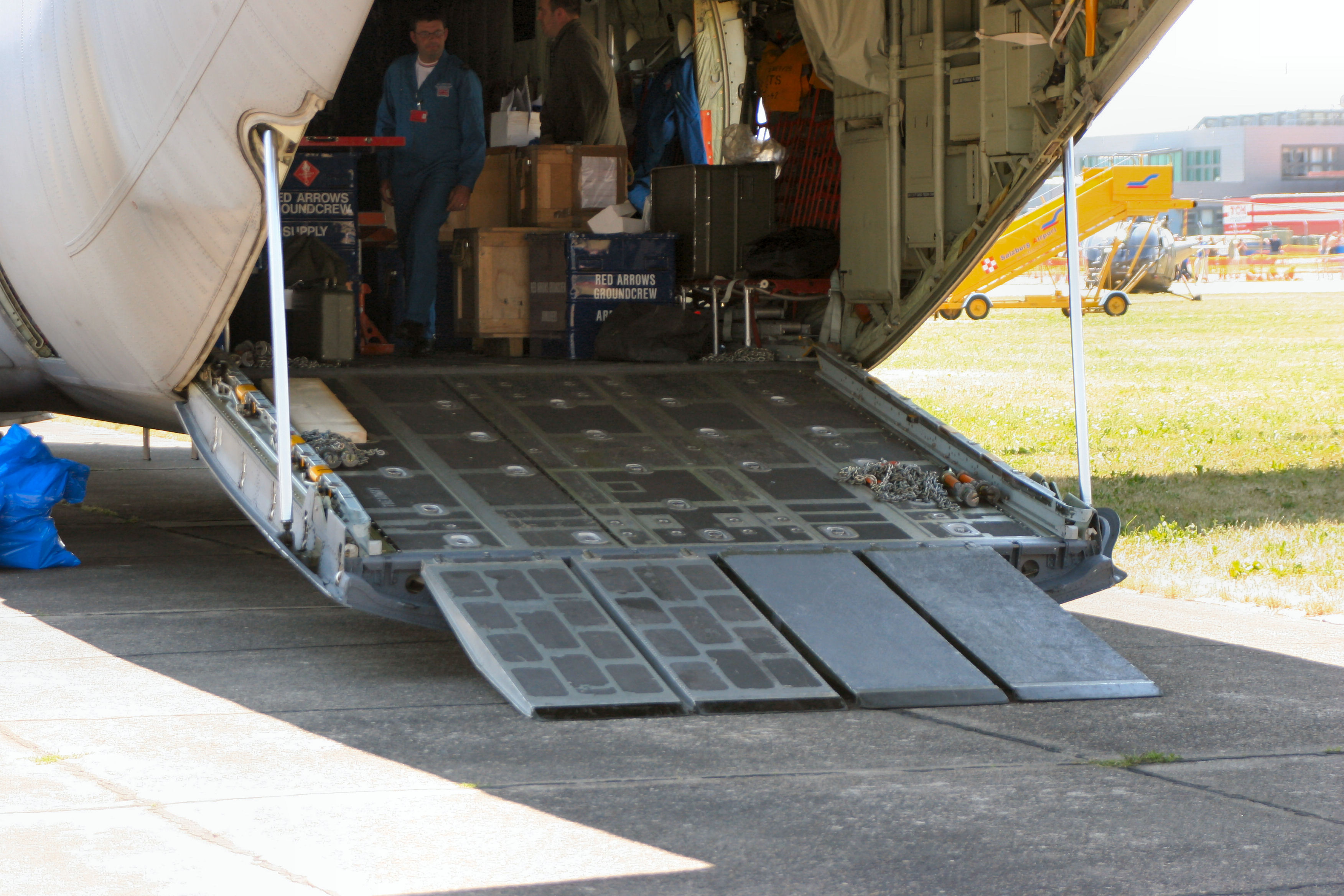
Squirrel season has been open since early September. I held off from hunting them until this morning. Early-season squirrel hunting is difficult with all of the leaves on the trees; it's hard to get a clear line of sight through all of the foliage. But this morning, I could wait no longer. I took my Marlin, 17 caliber rifle and trecked over to Patuxent River State Park. It was a damp, rainy morning, and while I saw a lot of wildlife, I saw no squirrels. What I did see was a young hawk.  He, silently, glided through the forest and perched himself on a branch about 15 feet away from where I sat. I watched him clean himself for a few minutes, before he noticed me, and flew away.  I also saw a couple of doe that were bedded down in some dense brush.  Were they in season, and I had the right gun, I'm sure I could have taken one.  But the coolest part of this hunting trip was spotting an eastern box turtle. His shell was a perfect camouflage of yellow and brown but his bright orange head and legs stood right out.  This turtle was really awesome! I've found shells in the woods before, but never have I seen a live box turtle. He, of course, tucked into his shell when I knelt down to take a closer look at him.  What a cool looking turtle.  He has red eyes and orange stripes on his head and legs.  I picked him up for a closer examination and was amazed to see that, unlike the red-eared turtles I used to catch as a kid, he could totally encase himself inside his shell.  With his head pulled inside, his bottom shell shuts, similar to the cargo door on a C-130.  A little reading about box turtles, taught me that their bottom shell is hinged to allow for total protection.  Neat!  


Feb 15, 2014

Update on the Winchester Model 63

I have been working on the old Winchester, .22 that I picked up a while ago; the Model 63 made in 1939. Though I did put quite a bit of work into removing the rust from the receiver and barrel using four-ought steel wool, a flattened brass shell casing, and that wonderful smelling Hoppes No. 9, there were other parts of the gun that needed replacement. The front sight for instance, was badly bent. My father helped me to replace this sight with a proper Lyman sight of the correct dimensions and vintage (thanks dad!). Also in need of replacement was the rusty old butt plate. Perhaps this gun stood on end in a damp basement or garage for some time. Whatever the cause, the butt plate was so heavily rusted that removing the rust from it would thin the material too much. Turning to Ebay, I was able to find a beat up stock, containing the butt plate I needed, and in much better condition to boot.  Still, the new butt plate will require a bit of work to remove the light rust on both sides of it.  I'm just glad it has some of the original bluing left on it.  Looks a lot better already.  

The last piece of the puzzle was the elevator for the rear sight. When I bought the rifle, this elevator was missing. I didn’t want to just throw any old elevator in there. And I certainly wasn't going to follow the advice of the gentleman I bought the rifle from:  "Throw a dime in there!"  (Yeah, thanks buddy)  I wanted it to be correct for the rifle. A Winchester factory original is what I was looking for. Again, turning to Ebay I was able to find an entire set of correct sights for my 63.  At any rate, I am having fun restoring this rifle as best I can.  I am eager to get it to the range and sight it in and think it will be a lot of fun for squirrel hunting next season.

Feb 9, 2014

Knife; handed down

I have always liked sheath knives. Well made sheath knives, with handles made of stacked leather, stag, or wood. I attribute this interest to the knives my father carried while raising me and teaching me the ways of the woods (hunting, fishing & camping). One of the knives he carried was quite large and was known by us kids as "the watermelon knife" because it was routinely used, on camping trips, to slice up juicy melon for the small army of children, that are my siblings; all nine of us.  The knife bore no markings from any manufacturers.   This is because it is truly a one-off piece, made by one of the workers at Savage Arms in Utica, NY during World War II.  During this time, workers made these knives from scrap materials in the plant and sent them to friends and relatives fighting the war overseas.  The blade is made from a scrap power hack-saw blade material.  The stacked bands in the handle are the same that were used in the .50 caliber machine gun handles that Savage Arms made at that time.  My father's uncle, Bill, worked for many years at Savage Arms and gave this knife to my father, some forty years ago.  Last weekend, my father handed it down to me.  I'm honored to have it.

Feb 8, 2014

Squirrel hunting - Patuxent River State Park

With only three more weekends left to hunt before the small game season ends on February 28th, I took a trip down to Patuxent River State Park to try and bag a couple more squirrels.  I've been switching scopes around from gun to gun and didn't have a scoped .22 that was zeroed, so I took my Marlin .17 caliber.  Some say that .17 caliber rifles are ideal for squirrel hunting.  But, I believe a rifle in .22 caliber is best fitted for hunting squirrels.  My experience has taught me that the .17 caliber round, even when firing the lighter 17 grain bullets, is a little too hot for these little guys.  Unless, of course, you hit them directly in the head.  I always aim for the head, but more often than not, my bullet lands in the shoulder or neck area.  As a result, the shoulder meat is usually wasted due to the destructive nature of the fast and small round.

Well, I was in the woods by 9:00am and except for woodpeckers and chickadees, I didn't see any activity. It as 27 degrees out and virtually no wind.  I did find the remains of a deer that the animals have picked clean.  I tried to determine if it had been shot, but there was no way of telling, that I could see.  I also found an old dump area, which held some neat old bottles and other interesting junk.  I found an old glass two-liter Pepsi bottle, with an aluminum cap which broke when I tried to free it from the frozen earth.  I had never seen one of them before.  Among the old garbage were various bottles, cans, childrens' toys and random household items.

Jan 25, 2014

Rabbit hunting - Patuxent River State Park

I got out hunting this morning, despite strong winds and temperatures just barely reaching up into the twenties.  I had been meaning to check out some of the swamp lands and field areas in Patuxent River State Park.  Rabbit hunting is something I really miss from my upbringing in upstate New York.  There, cottontail rabbits were abundant.  My buddy, Pat, and I used to hunt them on his father's land with his dog, and it was not uncommon for us to bag seven or eight within a couple of hours (His Beagle slurping up the gut piles as quick as we cleaned them - that always used to gross me out).  Here, in Maryland, its a different story.  We have so many foxes that take care of the rabbits on their own.  They leave very few for the small game hunter.  I usually see a red fox, at least, every other week.   Nevertheless, I did enjoy getting out with my Winchester, Model 12.  It's my favorite pump-action shotgun to carry.  Based on its serial number, mine was made in 1954.  It's a beautiful little 20 gauge; gifted to me from my father many years ago.  Thanks dad!


Although I saw many rabbit tracks, I also saw a whole lot more fox tracks.  Fox tracks are very easy to identify, because their feet fall, very nearly, in a straight line.  This is why they appear to lope along, when you see them crossing fields.  I recall my father explaining this to me as a young boy, as we knelt in the snow, examining tracks, high on a ridge in Deerfield Ravine.  Each hedge row that I poked along, exhibited a set of fox tracks that dipped in and out of the briers. Among the fox tracks were also evidence of the many small birds that I pushed along the hedges.  Their wings made small serrations into the snow where they swooped in and out of their feeding areas to pick at seed pods in the birdox.  Although I couldn't get a photo, I was pretty excited to see my first Oriels.  They're a beautiful bird.


I, of course, stopped to take a few obligatory pictures of my Model 12.  There is something so intrinsically beautiful about the wear of a well used rifle or shotgun; when the blued steel is worn to a silvery grey patina at the areas most find comfortable to hold the gun.  As my father always says:  "If these guns could talk, what a story they could tell."  I bet.  I like to think that some of the stories would be those of my father and I knocking partridge out of the sky when I was much younger.


One of the things I like most about hunting, is finding old/odd things.  Be it, glass bottles, turtle shells, antlers, or the ruins of an old farm house.  Today, I found an old tin shack.  I don't know what this shack was used for, but it did have electricity run to it.  Perhaps it was a hen house.  Maybe a bee house?  Not far from this shack, was an old stone foundation wall, from a barn.  And near to that, the remains an old farm house, with a foundation and tall chimneys as the only evidence of what once was.